

Best Way to Dry Clothes Indoors in Malaysia (No Smell, No Mould)
Learn the best way to dry clothes indoors in Malaysia without smell or mould. Practical methods for airflow, dehumidifiers, fan setup, and fabric care.
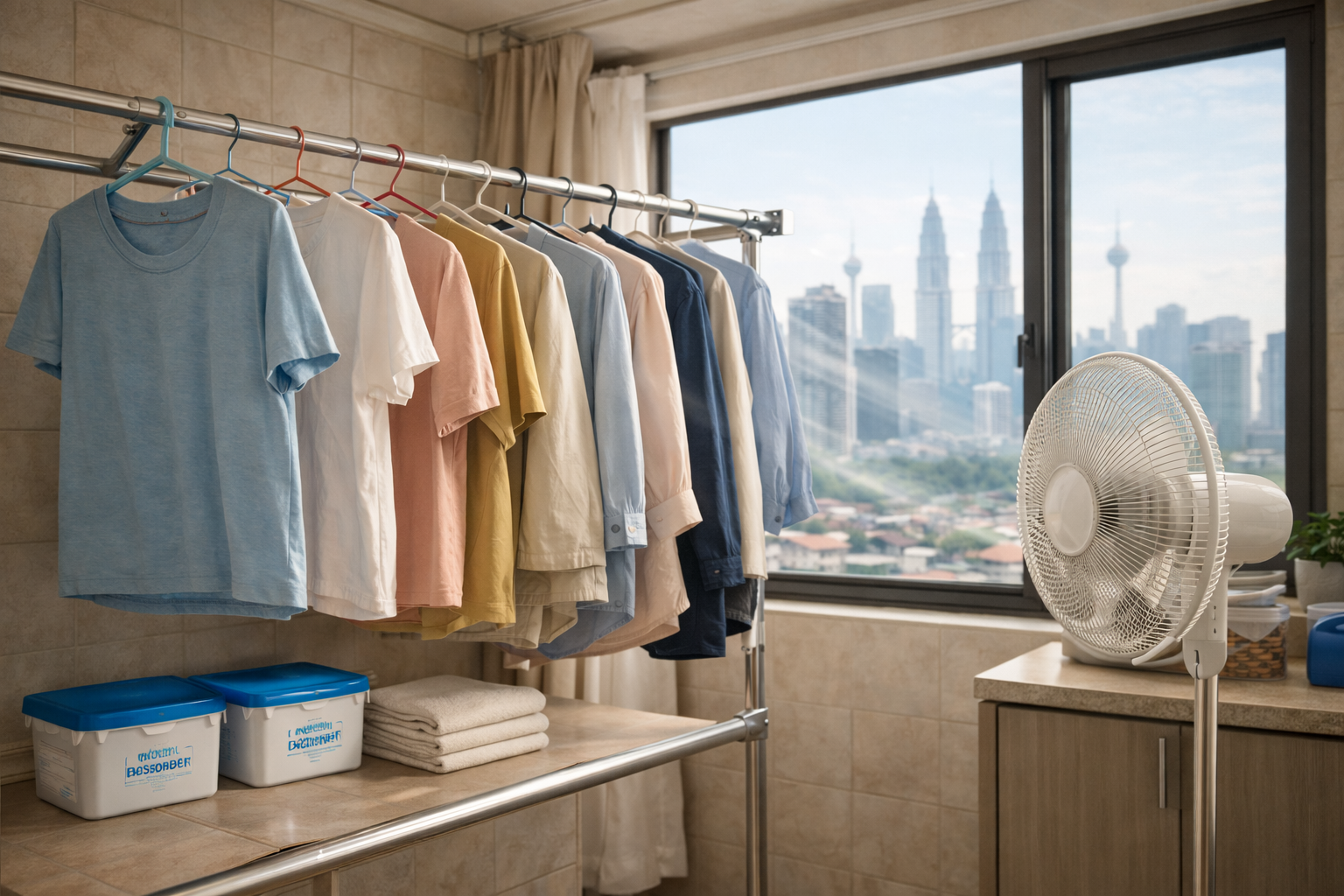
Drying clothes indoors in Malaysia is more common than drying them outside. Heavy rain, condo living, no balcony space, urban heat and security concerns push most households inside.
Done without the right method, indoor drying leads to musty smells, mould on clothes, damp wardrobes, sticky fabric and drying times that stretch all day.
If your laundry ends up smelly or mouldy, you are fixing the wrong part of the process. The problem is rarely the washing — it is the drying.
Earlier you learned:
👉 Why Clothes Smell Even After Washing in Malaysia
laundrymate.com.my/why-clothes-smell-even-after-washing-i…
👉 Why Mould on Clothes Is So Common in Malaysia
laundrymate.com.my/why-mould-on-clothes-is-so-common-in-m…
1. The Science: Humidity, Airflow and Fabric
Malaysia's climate combines humidity that often passes 80%, warm temperatures, and very little natural sunshine in the rainy months.
Most drying problems start with moisture that never leaves the fabric. If air cannot move around the clothes, that moisture stays trapped, and bacteria and mould thrive.
The key insight: drying is not about heat. It is about air movement, evaporation and time.
2. Common Mistakes When Drying Indoors
Hanging clothes too close together. Crammed clothes block airflow and slow evaporation.
Drying in a bathroom without ventilation. Bathrooms hold humidity, so clothes barely dry at all.
Pointing the fan in the wrong direction. A fan aimed at a wall or ceiling just moves warm, moist air around the room.
Leaving clothes damp overnight. Hours after washing, clothes can still be damp deep in the fibres.
Leaving clothes in the washing machine. Sitting wet in the drum is how mould and smell start.
3. How to Dry Clothes Indoors, Step by Step
These work in any Malaysian home, including small condos.
Unload the machine immediately
Take clothes out as soon as the wash ends. This stops moisture settling in.
Shake each item before hanging
Shaking separates the fibres, loosens trapped moisture and increases the surface area for evaporation.
Space clothes on the rack
Spacing is critical. Clothes must not touch each other.
Create cross-ventilation
With two windows or doors, put the rack between them and open both to create a wind path. With only one opening, use a fan to mimic it.
Use the fan properly
The fan should blow through the clothes, not around the room. Set it low, pointing horizontally, with the clothes directly in the airflow path. This alone cuts drying time dramatically.
Add a dehumidifier in the rainy season
Place it near the drying area, set it to a medium tank level and empty it daily. It removes moisture from the air rather than redistributing it.
Finish with airflow, not heat
Heat without airflow traps moisture. A fan and moving air dry faster than dry heat.
4. What Works Best by Fabric
| Fabric | What it needs |
|---|---|
| Cotton and everyday wear | Medium airflow, dries quickly if spaced |
| Denim and heavy fabrics | The longest time — cross airflow plus a fan |
| Delicates: lace, silk, thin fabrics | Airflow only, no high heat, hung separately |
| Sportswear and synthetics | High airflow, and a dehumidifier if you have one |
5. Tools That Actually Improve Results
- Foldable drying rack — space-efficient and promotes airflow.
- Wall-mounted double bars — best for condos, hangs clothes vertically with space between.
- Tower drying rack — worth it for large loads, uses vertical airflow.
- Portable dehumidifier — essential during rainy months and whenever windows stay shut.
- Oscillating fan — side-to-side airflow beats a static fan.
6. How Long Drying Should Take
Indoors, with proper airflow:
| Item | Expected time |
|---|---|
| T-shirts and tops | 3–5 hours |
| Jeans and denim | 6–9 hours |
| Towels | 5–7 hours |
| Delicates | 4–6 hours |
| Sportswear | 3–5 hours |
If clothes are still cold or damp after this, airflow or humidity is your limiting factor — not time.
7. Getting Rid of Musty Odours
Even with good drying, smells linger if clothes were damp too long, softener residue has built up, or airflow was weak.
- Air clothes outside for 10–15 minutes when you can
- Use a white vinegar rinse once a week
- Clean the washing machine with vinegar monthly
- Skip fabric softener during the rainy season
8. Seasonal Adjustments
Rainy season. Run a dehumidifier, boost airflow with fans, and never leave clothes sitting in the washer.
Hot dry season. Open windows early in the morning, and avoid drying in the midday sun — it fades colours.
Between seasons. Adjust your airflow direction and air the wardrobe out monthly.
Conclusion
In Malaysia, drying is the make-or-break step. If your drying method is weak, humidity and bacteria win no matter how well you washed.
Fix the drying and you remove musty smells, mould, damp fabric, constant rewashing and a lot of wasted effort.
If you have optimised your setup and clothes still smell or develop mould, it is worth handing it over — our machines dry at controlled temperatures and return everything fully dry.
Read next
The Ultimate Guide to Door-to-Door Laundry Services in Kuala Lumpur
Discover how door-to-door laundry services work in Kuala Lumpur. Learn benefits, pricing, and why LaundryMate is a trusted choice for fast pickup & delivery.
How Does Wash & Fold Service Work? (And Is It Worth It in Kuala Lumpur?)
Learn how Wash & Fold laundry service works in Kuala Lumpur. Pricing, process, benefits, and why it's the easiest way to handle weekly laundry in KL.
Dry Cleaning Kuala Lumpur — 2025 Premium Care Guide
Discover how dry cleaning works in Kuala Lumpur, including pricing, fabric care, and tips to choose a reliable service for suits, dresses, songket and premium garments.