

Introduction — Why Drying Clothes Indoors Is a Major Malaysian Problem
Drying clothes indoors in Malaysia is more common than outdoor drying. Heavy rain, condo living, lack of balcony space, urban heat, and security concerns force most households to dry garments inside. But without the right method, indoor drying leads to:
- Musty smells
- Mould growth on clothes
- Damp wardrobes
- Sticky fabric
- Prolonged drying times
If your laundry workflow ends with smelly or mouldy clothes, you’re solving the wrong part. The problem isn’t just washing — it’s drying.
If you missed our deep dives on why clothes smell even after washing or why mould develops on fabrics, read:
- Why Clothes Still Smell After Washing in Malaysia
https://laundrymate.com.my/why-clothes-smell-even-after-washing-in-malaysia-causes-fixes/ - Why Mould on Clothes Is So Common in Malaysia
https://laundrymate.com.my/why-mould-on-clothes-is-so-common-in-malaysia/
Now let’s fix this once and for all.
Section 1 — Understand the Science: Humidity, Airflow, and Fabric
Malaysia’s tropical climate combines:
- High humidity (often 80%+)
- Warm temperatures
- Little natural sunshine in rainy months
Most drying problems begin with moisture that never leaves the fabric. If air cannot move around clothes, moisture stays trapped → bacteria and mould thrive.
Key insight:
Drying is not about heat — it’s about air movement + evaporation + time.
Section 2 — Common Mistakes Malaysians Make When Drying Indoors
Before we fix it, understand what not to do.
Mistake 1 — Hanging Clothes Too Close Together
Crammed clothes block airflow and slow evaporation.
Mistake 2 — Drying in Bathrooms Without Ventilation
Bathrooms hold humidity, so clothes barely dry at all.
Mistake 3 — Using Fans Without Proper Direction
A fan that blows at a wall or ceiling doesn’t move air through the clothes — it just moves warm, moist air around.
Mistake 4 — Leaving Clothes Damp Overnight
Even several hours after washing, clothes may still be damp inside fibres.
Mistake 5 — Leaving Clothes in the Washing Machine
Clothes left sitting become a breeding ground for mould and smell.
Section 3 — Best Practices to Dry Clothes Indoors (Step-by-Step)
These steps work in ANY Malaysian home, even small condos.
Step 1 — Strip Clothes Out Immediately After Wash
Remove clothes right after the wash — this stops moisture settling.
Step 2 — Shake Clothes Before Hanging
Shaking:
- Separates fibres
- Loosens trapped moisture
- Improves evaporation surface
Step 3 — Use a Drying Rack With Gaps Between Clothes
Spacing is critical.
Clothes must not touch each other.
Step 4 — Create Cross-Ventilation
If you have 2 windows or doors:
- Place drying rack between them
- Create a wind path
- Open both simultaneously
If you only have one opening:
- Use a fan to mimic cross-ventilation
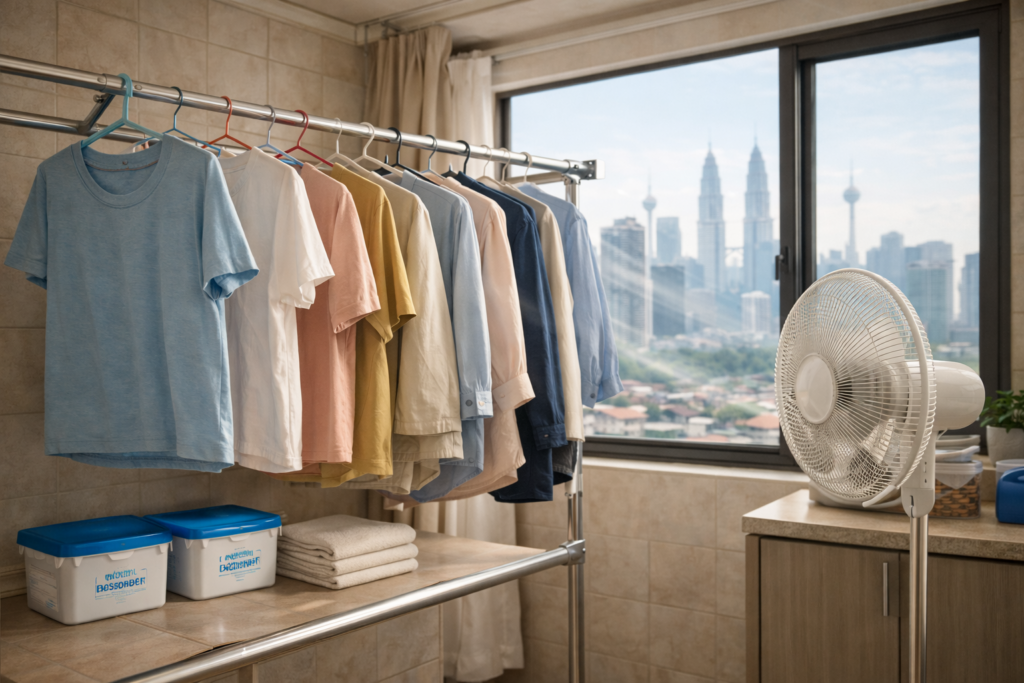
Step 5 — Use a Fan Strategically
The fan should:
- Blow through the clothes
- Not blow around the room aimlessly
Best setup:
- Fan low, pointing horizontally
- Clothes in front of airflow path
This dramatically reduces drying time.
Step 6 — Add a Dehumidifier During Rainy Seasons
For serious humidity control:
- Place near drying area
- Set to medium tank level
- Empty daily
This removes moisture from air instead of redistributing it.
Step 7 — Finish With Airflow — Not Heat
Don’t rely on heat alone:
- Heat systems without airflow trap moisture
- Fan + air movement dries faster than dry heat
Section 4 — What Works Best by Fabric Type
Cotton and Everyday Wear
- Medium airflow
- Can handle moderate airflow
- Quick dry if spaced
Denim and Heavy Fabrics
- Needs longest drying time
- Use cross airflow + fan
Delicates (Lace, Silk, Thin Fabrics)
- Airflow only (no high heat)
- Hang separately
- Avoid vibration fans that shake them
Sportswear and Synthetic Fabrics
- These trap moisture easily
- Use high airflow & dehumidifier if possible
Section 5 — Drying Tools That Actually Improve Results
1. Foldable Drying Rack
Space-efficient and promotes airflow.
2. Wall-Mounted Double Bars
Best for condos — places clothes vertically with space.
3. Tower Drying Racks
Homeowners with large laundry loads benefit from vertical airflow.
4. Portable Dehumidifier
Must-have during:
- Rainy months
- Closed windows
- Indoor drying areas
5. Oscillating Fan (Not just any fan)
Side-to-side airflow beats static airflow.
Section 6 — How Long Clothes Should Take to Dry (Malaysia Benchmarks)
Typical Benchmarks (indoors w/ airflow):
- T-shirts and tops: 3–5 hours
- Jeans and denim: 6–9 hours
- Towels: 5–7 hours
- Delicates: 4–6 hours
- Sportswear: 3–5 hours
If clothes are still cold or damp after these times, airflow or humidity is the limiting factor.
Section 7 — How to Eliminate Musty Odours After Drying
Even with good drying, smells can linger if:
- Clothes were damp too long
- Fabric softener residue exists
- Airflow was weak
Fixes:
- Air clothes outside for 10–15 minutes daily if possible
- Use white vinegar rinse once a week
- Wash machine with vinegar monthly
- Avoid fabric softener in rainy season
For stubborn smells, consider professional laundry services that guarantee fresh deodorised delivery.
CTA — When DIY Isn’t Enough
If you’ve optimized your drying setup and clothes still smell or develop mould, it’s time to bring in the professionals.
👉 Get fresh, fully dried laundry delivered to your door with LaundryMate — perfect for KL’s humidity and tight condo spaces:
https://laundrymate.com.my/
Our services include:
- Wash & Fold
- Dry Cleaning
- Bedding & Towels
- Curtain & Upholstery cleaning
Fresh, hygienic laundry delivered — no mould, no smell, no hassle.
Section 8 — Common Seasonal Problems & Solutions
Rainy Season
- Use dehumidifier
- Boost airflow with fans
- Don’t leave clothes long in washer
Hot Dry Season
- Open windows early morning
- Avoid drying in midday sun (colour fade)
Move Between Seasons
- Adjust airflow direction
- Ventilate wardrobe monthly
Conclusion — Drying Matters More Than You Think
In Malaysia, drying is the make or break step in laundry.
If your drying method is weak, bacteria, humidity and smell will win — regardless of how well you wash.
Fixing the drying process eliminates:
- Musty smells
- Mould
- Damp fabric
- Frequent rewashing
- Wasted time and effort
Dry right — and your clothes stay cleaner, fresher, longer.


